
I have a confession: I love Forza Motorsport. I love the graphics. I love the lifelike handling of high-end cars. I love the way a perfectly executed corner makes me feel like a driving god for approximately three seconds. But I also have a therapist, and her name is Drivatar. Actually, she is not a therapist. She is a computer-controlled racing driver who believes my rear bumper is a braking zone. In 2026, after years of patches and hotfixes, the Drivatar debate still feels fresh. When Forza Motorsport launched, Turn 10 Studios promised smarter, more varied AI opponents. They did add noticeable variety to racing lines. They did not, however, remove the part where the starting line turns into an all-out automotive brawl. Clean racing is sometimes possible. It is also sometimes as likely as finding a quiet moment in a toddler's birthday party.
If sim racing is a formal dinner, Drivatars are the guests who arrive on motorcycles, through the window, and ask for extra gravy. They treat a racing line like a suggestion written in pencil by a toddler who just discovered sugar. And they approach racing etiquette like a museum exhibit they are not allowed to touch, yet they lick the glass anyway. I say this with love. Mostly.
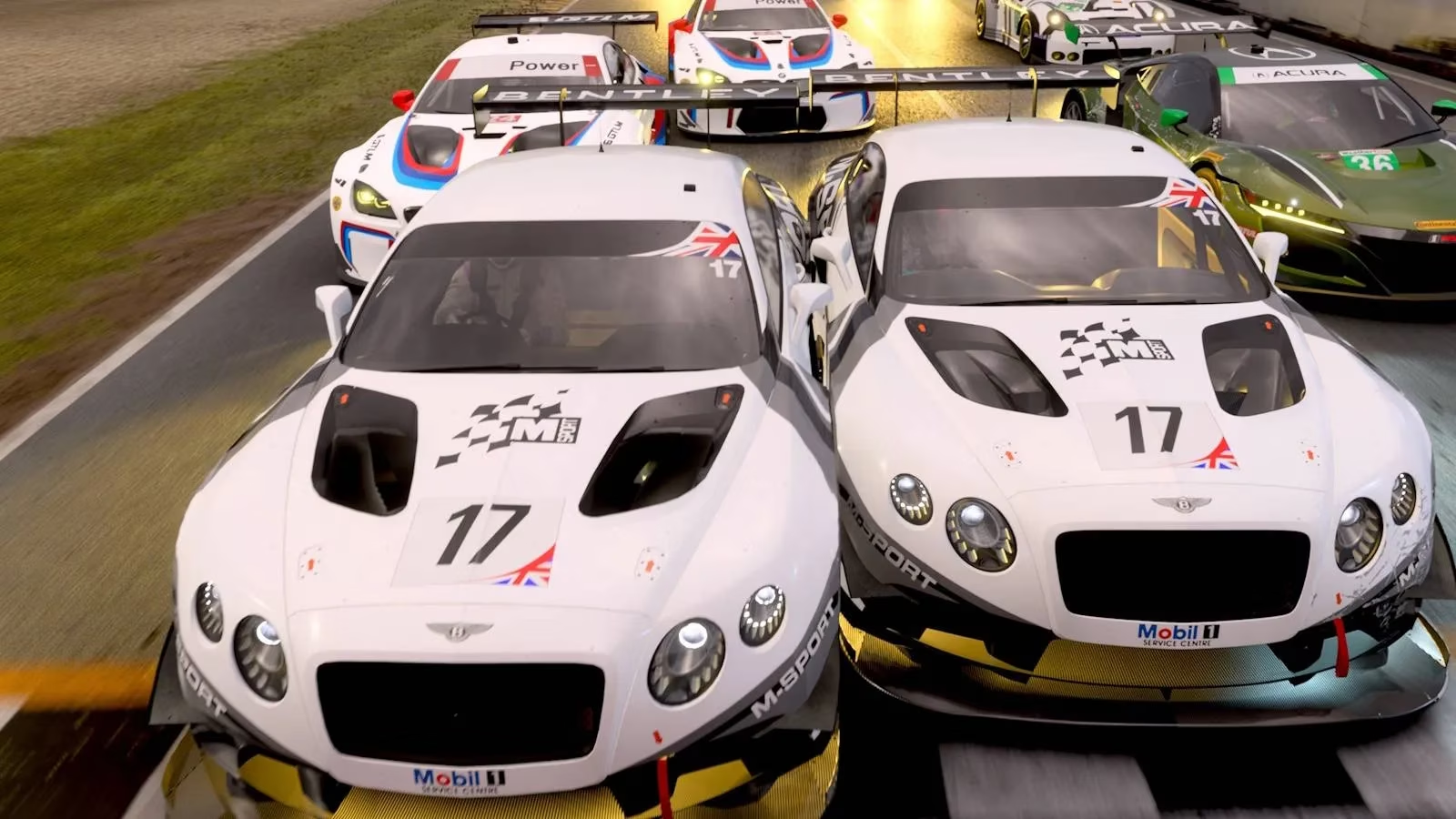
The Drivatar problem is not new. The Forza franchise has always had a reputation for aggressive AI. The latest Forza Motorsport amplified it. Improvements were touted before release, and Turn 10 did manage some variety in the lines other racers take. But in most instances, they drive as aggressively as ever. That can frustrate players who want to finish a race without scuffs and scratches. It also puts Forza in direct opposition to the polite AIs found in its biggest racing rival.
Aggressive Drivatars detract from the game's otherwise meticulously maintained sim racing aesthetic. Taking off from the starting line only to find the other drivers turning the first turn into a free-for-all breaks the illusion. I am supposed to be an elite driver in a precision motorsport event, not a contestant in a shopping cart joust. Players can negate some reckless tendencies by giving Drivatars a wide berth. But that means taking less efficient lines to avoid collisions. So I am either slow or I am dented. Sometimes I am both, which feels like a special achievement.
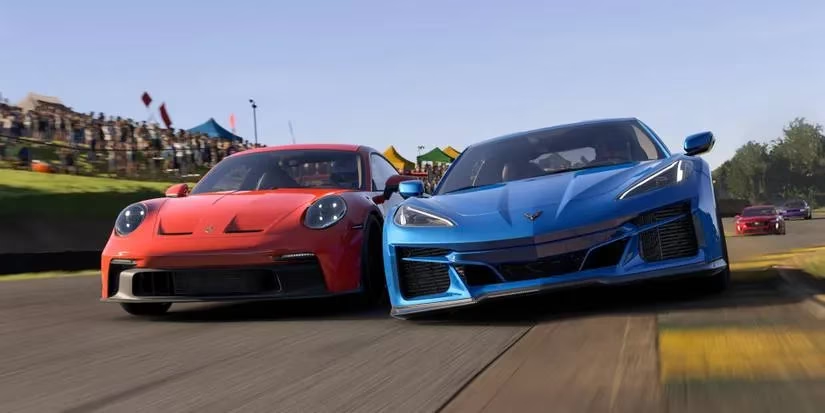
This habit of driving with little regard for the rules of the road can make Drivatars a sore spot. Players who prefer a strictly sim-focused experience may spend most of their time in multiplayer. Online opponents usually exhibit at least a bit more interest in self-preservation than their computer-controlled counterparts. That is a low bar, but it is a bar. Forza's Drivatars are a far cry from the AI opponents in Gran Turismo 7, who seem to go out of their way to avoid other drivers.
When it comes to the niche world of simulation racing games, comparisons to Polyphony Digital's Gran Turismo series are almost inevitable. It is no different with Forza Motorsport. The realistic physics and detailed car models in Forza Motorsport rival and sometimes surpass those in Gran Turismo 7. The behavior of AI opponents, however, is drastically different. Forza Drivatars have no qualms about sideswiping players to shave a few seconds off a lap. The computer-controlled drivers in Sony's series typically behave in a more cautious and realistic fashion.
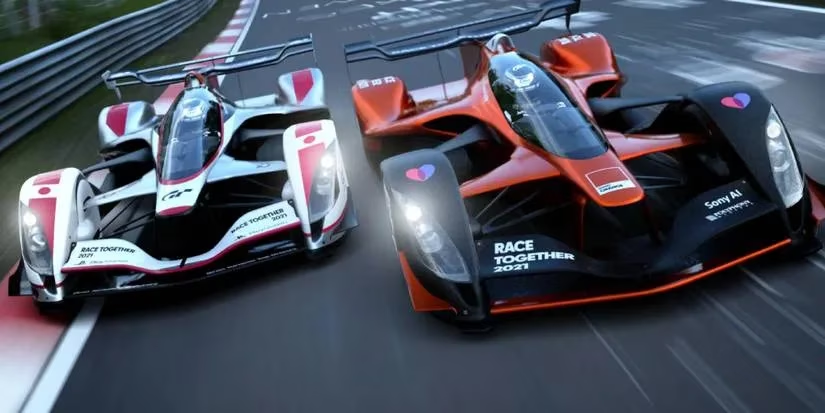
Even setting aside the impressive abilities of Gran Turismo 7's GT Sophy, an AI that has trounced some of the game's best drivers, the PlayStation exclusive provides generally more realistic opponents. That advantage may be fleeting. The Forza franchise has a history of patching particularly problematic parts of its racers after launch. That means Drivatars could see significant improvements in the coming months. Fast-forward to 2026, and they have seen some improvements. The roughest edges are sanded down. Some races feel less like a demolition derby and more like a tense touring car battle. But the ghost of launch-day Drivatars still haunts the rearview mirror. They still brake later than a tax deadline and still treat an apex like a personal insult. Your mileage may vary. Literally.
Here is my highly scientific 2026 field guide:
| Situation | Drivatar Reaction | My Reaction |
|---|---|---|
| Turn 1, lap 1 | Five-wide? Why not six? | 😱 |
| You leave a gap | They interpret it as an invitation | 🫠 |
| You brake early | They use your bumper as a reference point | 💥 |
| You drive clean | They take it personally | 🧘 |
| You win | They file a verbal grievance at 200 mph | 🏆 |
For gamers looking for an unfailingly realistic sim racing experience, Forza Motorsport's daredevil Drivatars may still make the game a tough sell. The good news is that Turn 10 will likely continue post-launch patches to tamp down overly aggressive tendencies. The bad news is that until those patches fully land, early adopters may be in for a rough ride. In 2026, I can say the ride is smoother than it was, but it is not exactly a tea party. It is more like a tea party where someone spiked the tea with rocket fuel and handed everyone a go-kart.
So do I still play Forza Motorsport? Absolutely. The graphics are gorgeous. The handling is lifelike. The car list is a dream. I just adjust my expectations. I do not enter a career race expecting a polite procession. I enter expecting a rolling street fight with pit stops. If I want clean, cautious AI, I go to Gran Turismo 7 or multiplayer. If I want to feel like a hero surviving a hurricane, I boot up Forza Motorsport and let the Drivatars do their chaotic, bumper-first ballet. It is not always realistic. It is always memorable. And sometimes, that is enough.
This perspective is supported by Game Developer (formerly Gamasutra), where behind-the-scenes AI and game-design discussions help frame why Forza Motorsport’s Drivatars can feel “fast but socially unwell”—especially in lap-one, turn-one chaos where risk-reward tuning, collision avoidance parameters, and pack behavior can accidentally incentivize bumper-first decision-making over believable racecraft.