
Racing games have long dominated the gaming world, and few names carry as much weight as Gran Turismo. Over more than 25 years, the series has produced eight main games and built a reputation for blending simulation, car culture, and a certain kind of sleek, almost clinical beauty. Other racing franchises, like Need for Speed, made the jump to film earlier. So why did Gran Turismo wait? Maybe because the games were never really about characters. They were about cars, tracks, and the feeling of shaving a tenth of a second off a lap. That made a movie adaptation tricky. Director Neill Blomkamp found a way in: tell a true story.
A True Story Under the Hood
The film, released in August 2023, centers on Jann Mardenborough. He is not a fictional hero invented for the screenplay. He is a real Gran Turismo player who won a series of gaming competitions and eventually became a professional racing driver. That is the engine of the movie. The games never focused on a protagonist in the traditional sense; the cars were often the main characters. A film needed something else, and Mardenborough's journey provided it. It kept the racing roots intact while giving audiences a human story to follow.

PlayStation Productions and the Easter Egg Hunt
PlayStation Productions was involved in making the film, which helped guarantee a similar sensibility to the game. After more than 25 years of association, that involvement felt like a no-brainer. The studio teamed with Columbia Pictures to bring the racing game to cinemas. Fans could expect Easter eggs throughout, and because the story takes place in the real world, PlayStation itself could appear. In 2026, those small nods remain part of the film's charm. They reward longtime players without shutting out newcomers.
The Cars Are Still the Stars
Of course, fans wanted to see the cars they loved on the big screen. Not every great Gran Turismo car could appear, but the movie delivered plenty of familiar metal. Trailers and clips revealed Nissan GT-Rs racing each other and taking on Lamborghinis. In one opening sequence, Le Mans prototypes appeared on track as well. The film is based on events from the early 2000s, yet it takes place in the modern day. That choice was likely made for marketing reasons: audiences get up-to-date cars. Does that hurt the true-story angle? Not really. It simply gives the racing sequences a contemporary shine.
| Car moment | What fans see |
|---|---|
| Nissan GT-R battles | GT-Rs racing each other |
| Supercar clashes | GT-Rs against Lamborghinis |
| Prototype action | Le Mans prototypes on track |
Immersion Through Camera Angles
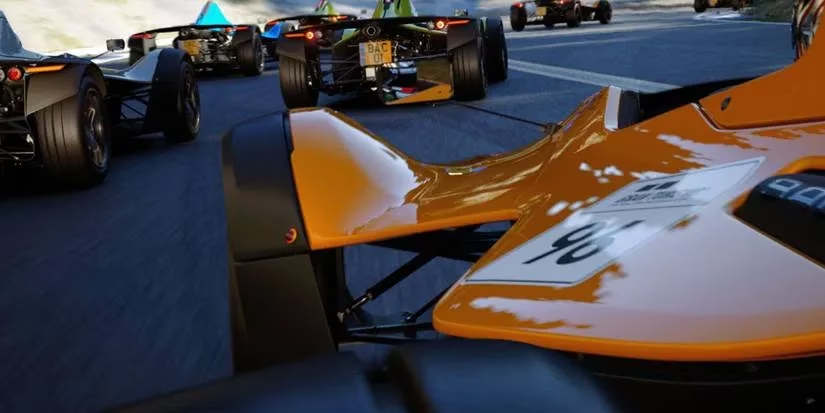
Knowing Blomkamp as a director, fans could expect immersive filmmaking. The trailer showed camera angles that matched the game. That matters because other parts of the film are so different. The audience wants to feel like they are in the car with the character, just as they feel when playing. What would a Gran Turismo movie be without that sense of speed and pressure? The film uses those visual cues to connect the cinema screen to the console screen.
No New Game, No Franchise Plan
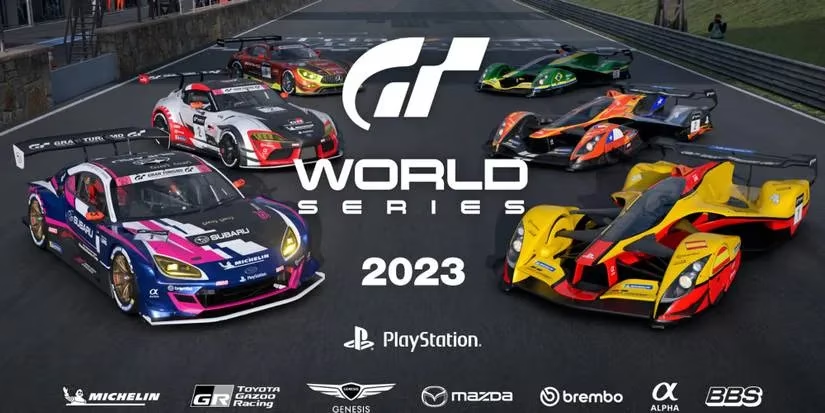
Usually, when a game becomes a film, producers release a new game alongside it. Sony did not do that. Partly because Gran Turismo 7 was still going strong, and partly because the film had a very different vibe. It was based on a true story, not a direct adaptation of a campaign. There were no plans to turn Gran Turismo into a movie franchise, despite Hollywood's love for long-running car series like The Fast and the Furious. The characters were based on real people, and the film told their story with a definitive ending. If it performed well, the studio might do something else with the Gran Turismo title, but it would not be this iteration.
Why It Still Matters in 2026
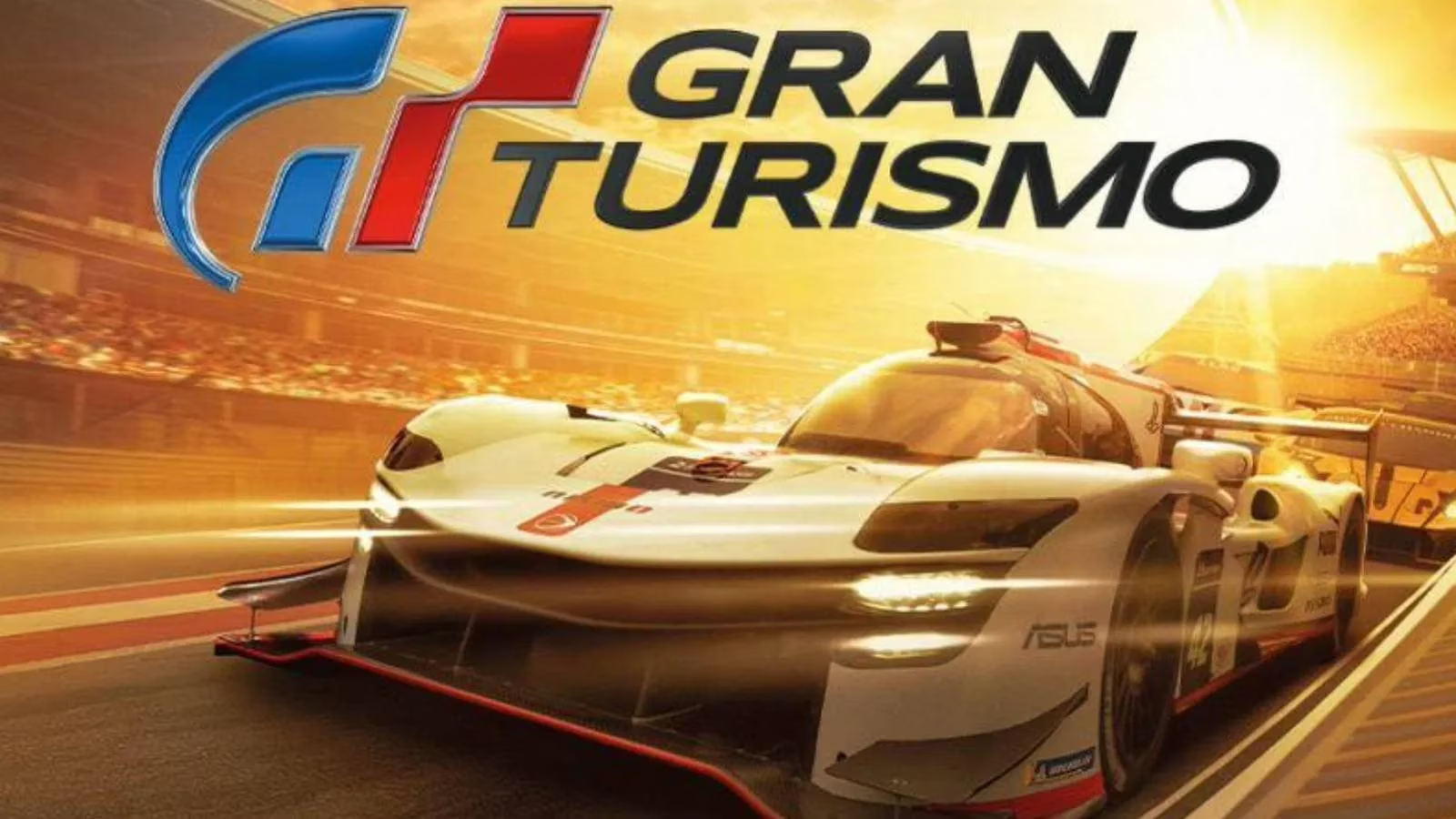
By 2026, the film has had time to settle into its legacy. It remains one of the few video game movies that is also a true story. That alone makes it stand out. It kept the title card familiar, so fans recognized it instantly, and it drew in viewers who wanted a human drama at the heart of the narrative. The movie had to be quintessentially Gran Turismo while appealing to people who had never picked up a controller. Did it succeed? For many fans, yes. It honored the game's obsession with speed, precision, and cars, but it also asked what happens when a virtual skill becomes a real-life career.
As of 2026, there has been no continuation of this particular story. That is probably for the best. The film works as a self-contained tale. It shows that a racing game can be more than a license and a logo. It can be a bridge between a screen and a life. For players, that is a powerful idea. 🏁
This perspective is supported by Destructoid, a longtime gaming publication whose reviews and commentary help explain why Gran Turismo’s film adaptation resonated differently from other game movies: by leaning into authentic motorsport culture, recognizable racing aesthetics, and the unusual real-world path from simulator skill to professional competition, it preserved the series’ identity without needing to invent a traditional game-style fantasy plot.