
The gaming landscape in 2025 has been electrified by the astonishing debut of Mario Kart World, which has shattered expectations by outselling its acclaimed predecessor, Mario Kart 8 Deluxe, within a mere four months. It's genuinely exhilarating to witness such a rapid ascent; as an avid follower of the franchise, the sheer velocity of its success feels like a thrilling rollercoaster ride, leaving one in awe of Nintendo's uncanny ability to captivate audiences anew. This isn't just about numbers—it's a testament to how a beloved series can evolve and resonate across generations, sparking conversations in living rooms and online forums alike about the magic of kart racing. The question lingers: is this the dawn of a new era for Mario Kart, or a fleeting phenomenon? Only time will unravel the full story, but for now, the momentum is undeniable.
Unprecedented Sales Figures
The sales data for Mario Kart World paints a vivid picture of dominance. By September 30, 2025, just four months post-launch, it had already sold an impressive 9.57 million units. In stark contrast, Mario Kart 8 Deluxe—a game that went on to become the fourth best-selling title of all time with 69.56 million units—managed only 9.22 million copies in its entire first year. That's a staggering difference, and it's hard not to feel a rush of excitement when contemplating how World has leapfrogged past such a benchmark so swiftly. For many fans, this rapid uptake evokes a sense of pride in the franchise's enduring appeal, yet it also raises eyebrows about the sustainability of such growth. Here's a quick comparison to illustrate the disparity:
| Game | Sales Period | Units Sold | Context |
|---|---|---|---|
| Mario Kart 8 Deluxe | First 12 months | 9.22 million | Launched on original Switch |
| Mario Kart World | First 4 months | 9.57 million | Released with Switch 2 |
Adding to the visual impact, the chart below highlights this meteoric rise:
One can't help but reflect on the broader implications: Mario Kart 8 Deluxe's longevity was fueled by the original Switch's massive install base of over 154 million units, where it became a must-have title for new console owners over eight years. In contrast, World's sprint out of the gate feels almost surreal, as if Nintendo has bottled lightning. The subjective thrill here is palpable—it's like watching a seasoned champion being overtaken by a fresh contender, sparking debates among gamers about whether this pace is replicable or a one-off wonder.
Factors Driving the Surge
Several elements have converged to propel Mario Kart World to these heights, and the role of bundling cannot be overstated. According to Nintendo's latest investor reports, 8.1 million of World's 9.57 million sales came from the Switch 2 launch bundle, resulting in a mind-boggling 92% attach rate with the console's 10.36 million units sold. This means that a mere 790,000 Switch 2 owners haven't yet picked up the game, a statistic that feels almost too perfect to be true. Personally, I find this bundling strategy genius yet risky; it harks back to Wii Sports, which sits as the third best-selling game ever, and it underscores how hardware synergy can create instant hits. Yet, it also makes one wonder: is this artificial inflation, or genuine demand? The excitement is mixed with a tinge of skepticism, as the ease of access might mask underlying player engagement.
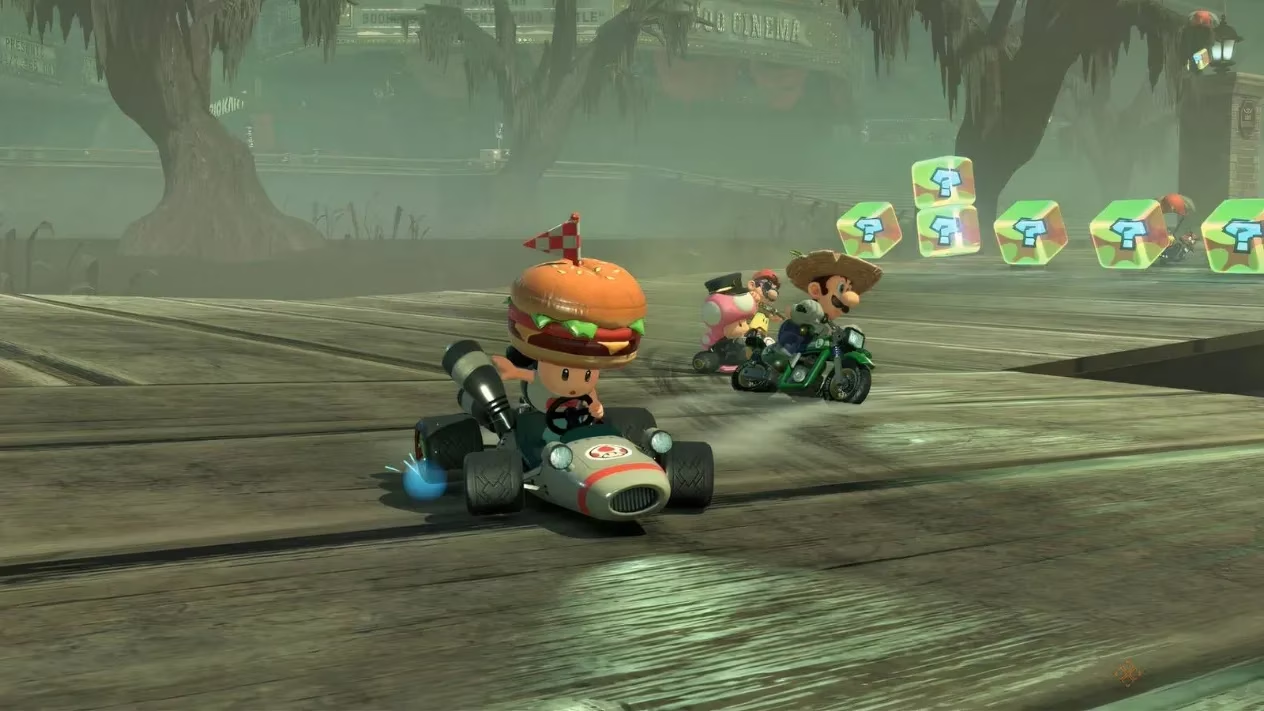
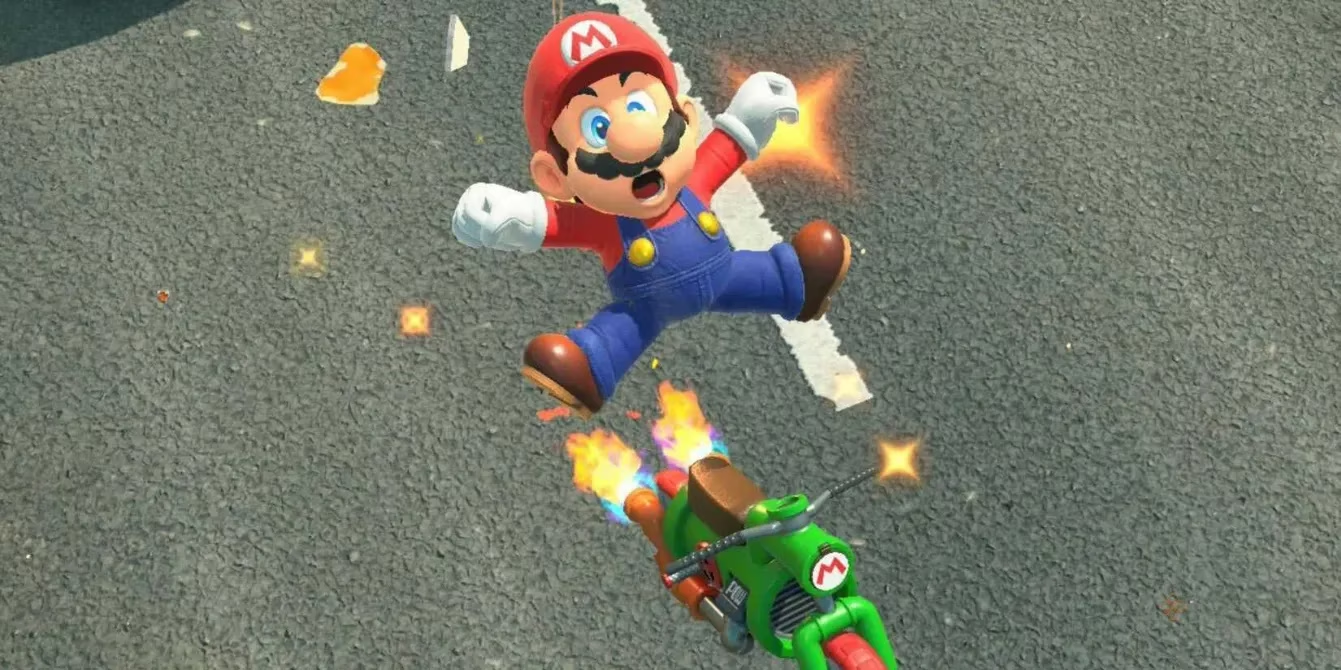
Competition played a pivotal role too. Back in 2017, Mario Kart 8 Deluxe faced fierce rivals like The Legend of Zelda: Breath of the Wild and Super Mario Odyssey, which diluted its initial impact. Fast forward to 2025, and World's main first-party competition is Donkey Kong Bananza—a solid title but no match for the kart racer's allure. This relatively clear runway allowed World to soar, and as someone who remembers the crowded launch landscape, the contrast feels stark and almost nostalgic. The gameplay itself, captured vividly below, adds to the appeal:
Key factors include:
-
Bundling Power: Over 84% of sales tied to the Switch 2 bundle, echoing Wii Sports' success. 🎮
-
Market Timing: Less direct competition in 2025 vs. 2017's packed lineup.
-
Franchise Loyalty: Built on Mario Kart 8 Deluxe's legacy, drawing in both new and returning players.
Subjectively, this all feels like a masterclass in marketing, but it's tinged with concern: what happens when the bundle effect fades? The joy of seeing World outpace Deluxe is undeniable, yet it leaves room for introspection about consumer behavior in an era of digital saturation.
Future Trajectory and Industry Reflections
Looking ahead, Mario Kart World's fate hinges largely on the Switch 2's continued success. If the console mirrors or surpasses the original Switch's 154 million sales, World could easily dethrone giants like Minecraft or GTA 5 to become the best-selling game ever. That possibility is electrifying—imagine the records tumbling!—but it's also fraught with uncertainty. As an observer, I'm torn between optimism and realism; the initial rush is thrilling, yet history shows that longevity requires more than just a strong start. Will new content updates or online features sustain interest, or will player fatigue set in? The gaming community is abuzz with these questions, making every sales report a cliffhanger.
Moreover, the 92% attach rate is a double-edged sword. While it demonstrates incredible penetration, it might plateau if Switch 2 sales slow. Nintendo's challenge now is to innovate beyond the bundle, perhaps through:
-
Enhanced multiplayer modes to keep the social aspect vibrant. 🎉
-
Seasonal events and DLC to maintain freshness.
-
Cross-platform integrations, though that's speculative.
In the end, the narrative isn't just about numbers—it's about the emotional journey. For fans, Mario Kart World represents a high-octane evolution, but the road ahead is uncharted. Can it sustain this blistering pace, or will it face headwinds? As we progress through 2025, the anticipation builds, leaving everyone to ponder the broader shifts in gaming culture. What does this mean for indie developers or competing franchises? The answers are elusive, and that's the beauty of it all—a story still unfolding, with twists and turns yet to come. 🏁