
The gaming landscape witnessed an unexpected twist in summer 2025 when Mario Kart World, Nintendo's flashy new racing flagship, found itself trailing behind its eight-year-old predecessor Mario Kart 8 Deluxe in July sales. This surprising development occurred despite Mario Kart World's status as a Switch 2 exclusive launched just weeks earlier with tremendous fanfare. Industry analysts watched in disbelief as the fresh installment stumbled against a veteran title that should have been enjoying retirement by now. There's a palpable irony in seeing cutting-edge technology struggle against its own legacy, making one ponder whether innovation alone can capture players' hearts in today's saturated market.
Launched on June 5 as the crown jewel of Nintendo's next-generation console, Mario Kart World initially soared with record-breaking digital pre-orders and physical sales. Its gravity-defying track designs and reimagined power-up system generated palpable excitement during the launch window. Yet by July, Circana sales data revealed a dramatic reversal: the newcomer plummeted from first to sixth place in U.S. Nintendo game rankings while Mario Kart 8 Deluxe surged to fourth. Both were unexpectedly overshadowed by Donkey Kong Bananza, another Switch 2 title, creating a bizarre podium where new and old coexisted uneasily. This sales whiplash feels particularly jarring for players who invested early in the premium $80 experience, only to watch friends still happily drifting through the familiar rainbow roads of the cheaper predecessor.
Market realities explain much of this paradox. Mario Kart 8 Deluxe enjoys access to Nintendo's entire 158-million-strong Switch ecosystem through backward compatibility, while Mario Kart World remains confined to the Switch 2's nascent install base of approximately six million units. When considering that Mario Kart World's lifetime sales nearly match total Switch 2 consoles sold, its performance transforms from disappointing to impressive. Still, the sting of direct comparison lingers - how does a franchise's future justify itself when its past remains so stubbornly present? Technical arguments about hardware limitations feel hollow when players vote with wallets for the comfortable old favorite.
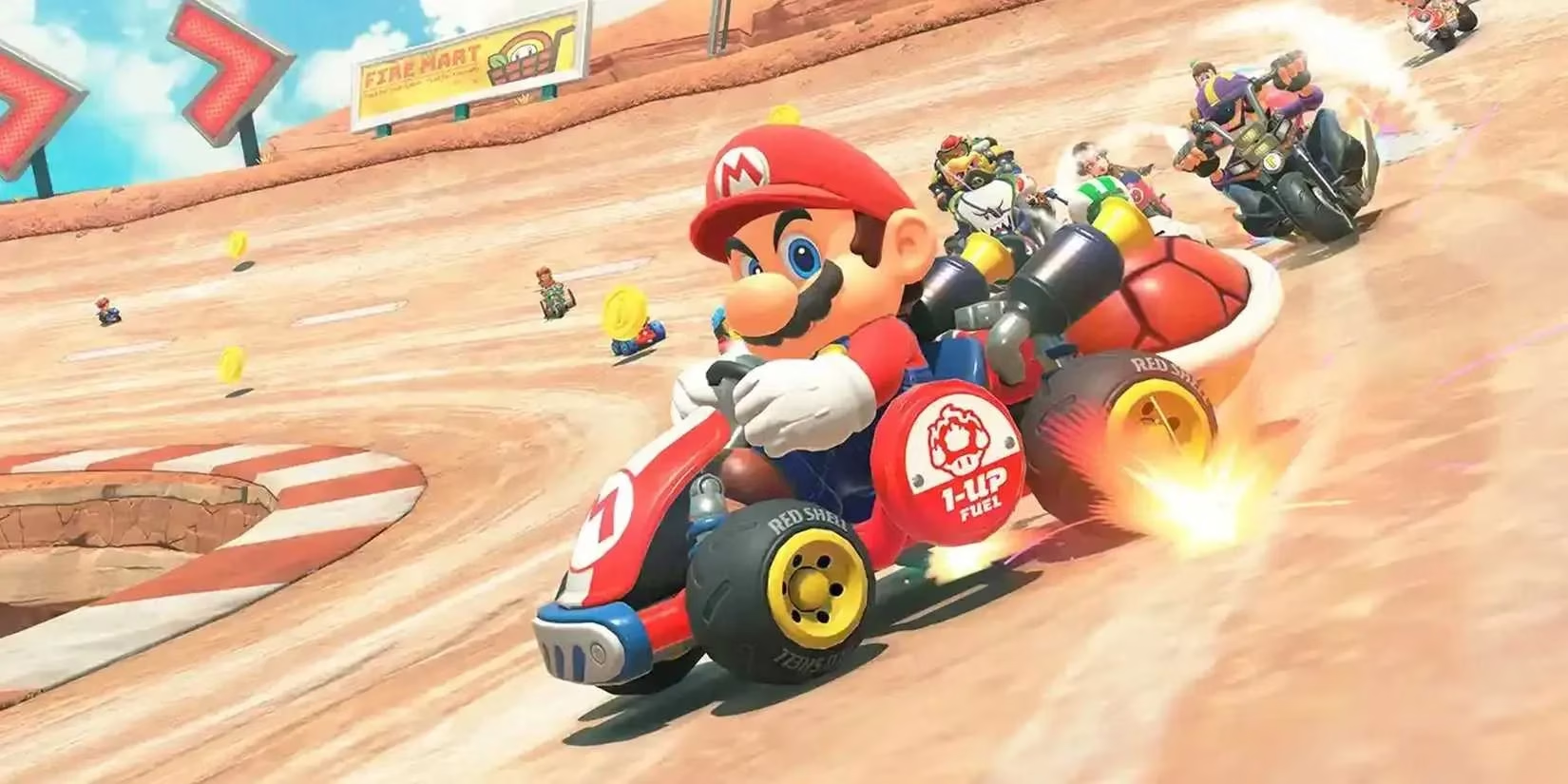
Several factors contributed to the slowdown:
-
⚖️ Pricing disparity: At $80 versus Mario Kart 8 Deluxe's frequent $40 sales
-
🧩 Feature controversies: Removal of beloved battle modes and controversial item rebalancing
-
🛠️ Post-launch turbulence: A day-one patch that accidentally reset progress for some players
-
🕹️ Accessibility gap: Requires $400 console investment versus existing Switch ownership
Players expressed mixed emotions about the new entry. "It's visually stunning but somehow lacks the magic," confessed one longtime fan, echoing sentiments across forums where debates rage about whether innovation went too far. The frustration feels especially acute considering Nintendo's impeccable track record with the franchise. Yet beneath the surface, there's cautious optimism that Mario Kart World's upcoming content roadmap could turn the tide. The game's core mechanics shine during nighttime Tokyo circuits where neon reflections dance across rain-slicked roads, suggesting the potential greatness waiting to be unlocked.
Looking ahead, Nintendo faces a fascinating strategic dilemma. With both titles now coexisting in the marketplace, the company must balance ongoing support for its cash cow while nurturing its technological showcase. The coming holiday season presents a critical test - will Switch 2's expanding user base naturally boost Mario Kart World's fortunes, or will the siren song of Mario Kart 8 Deluxe's proven fun continue to dominate? Industry watchers note that every major console transition experiences these awkward generational handoffs, but rarely with such direct competition within the same franchise. As autumn 2025 approaches, the racing series finds itself at a crossroads between honoring its past and accelerating toward its future. Players are left wondering: can a franchise simultaneously live in two eras, or must one eventually yield to the other? The checkered flag hasn't waved on this unexpected showdown just yet.