
I still remember the first time I hit the anti-gravity section in Mario Kart 8. I was cruising through Electrodrome, minding my own business, when the road curled up like a ribbon and suddenly I was racing upside-down with the whole world flipped above me. My kart’s wheels snapped sideways, the music kicked in, and I grinned like a kid who just found a secret shortcut. That moment was pure Nintendo magic. But it’s 2026 now, the Booster Course Pass is old news, and I’ve had years to chew on one nagging thought: the anti-gravity gimmick looks amazing, but it doesn’t actually change how I race.
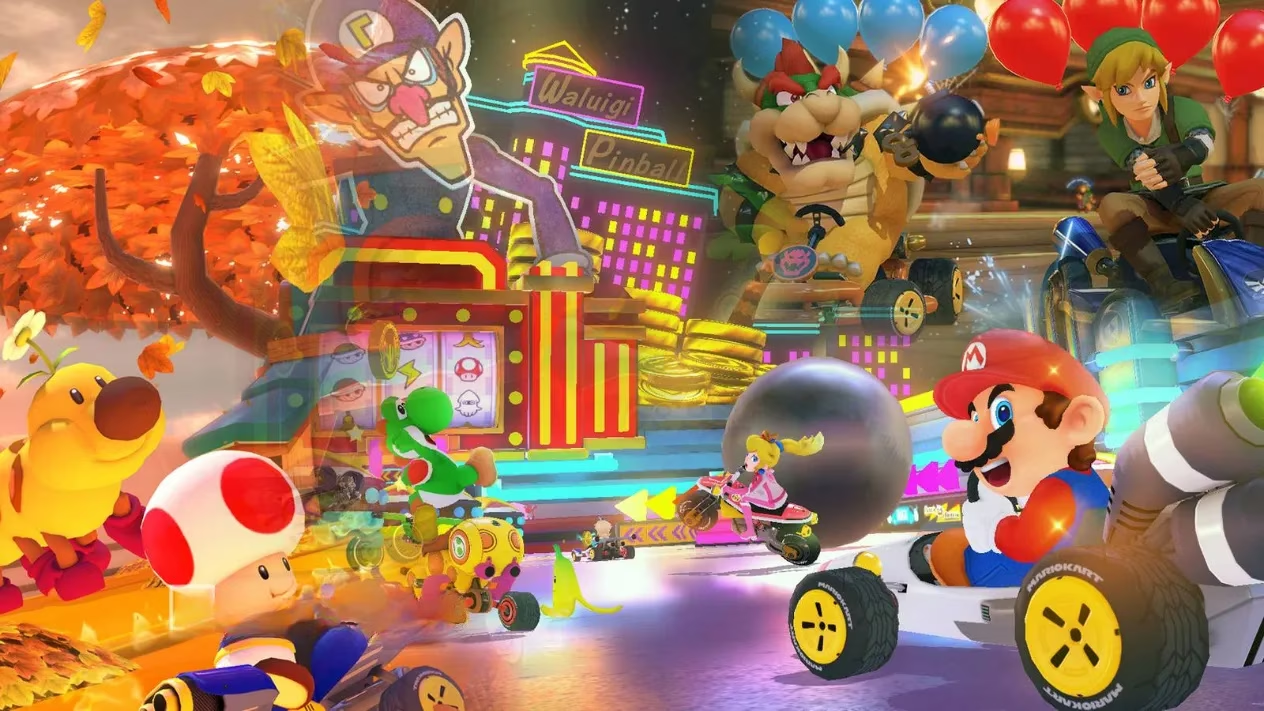
On paper, anti-gravity is a no-brainer. Wheels transform, tracks bend, and you can bump into other racers to earn a spin boost. Hit a pole and you get a little kick of speed, too. Tracks like Electrodrome and Shy Guy Falls use it beautifully. Racing against a waterfall or watching rivals zip upside-down above you is the kind of spectacle that makes Mario Kart feel like a theme park on wheels. Nintendo knows how to sell a moment, and when anti-gravity is on screen, it sells the whole nine yards.
But when the rubber meets the road—or, uh, the ceiling—the mechanic is about as deep as a puddle. The bump boost is a perfect example. In a normal race, bumping another racer can be a risk: weight matters, and a lightweight character can get shoved around. In anti-gravity mode, though, bumping is basically free speed. There’s no real reason not to do it, unless you’re holding an item you don’t want to waste. That’s not strategy; that’s a reflex. I don’t find myself thinking, Should I bump here? I just do it because why wouldn’t I? It’s like finding a dollar on the sidewalk—you pick it up.
The bigger problem is consistency. Mario Kart 8 introduced anti-gravity, but not every track uses it. Some maps just ignore the gimmick for no good reason. Animal Crossing changes seasons but keeps the same layout, and Excitebike Arena has randomized sections that still feel samey. I’m not saying every track needs to be a Möbius strip, but if you’ve got a signature mechanic, use it. Otherwise, it starts to feel like a party trick rather than the main event.
That’s why I keep looking back at Mario Kart: Double Dash!! with googly eyes. Now that was a gimmick with meat on the bones. You paired two characters on one kart, swapped them mid-race, and used special items tied to specific duos. Baby Mario and Baby Luigi had the Chain Chomp; Bowser and Bowser Jr. had the Bowser Shell; Peach and Daisy had the Heart Shield. Your character choices mattered. Your item game mattered. Your timing mattered. It was simple on the surface, but it added a layer of strategy that I still miss.
Here’s a quick comparison that sums up my feelings:
| Gimmick | Spectacle | Strategic Impact | Consistency |
|---|---|---|---|
| Anti-gravity (MK8) | 🌟🌟🌟🌟🌟 | 🌟🌟 | 🌟🌟 |
| Double Dash pairings | 🌟🌟🌟 | 🌟🌟🌟🌟🌟 | 🌟🌟🌟🌟 |
Don’t get me wrong: I don’t want Nintendo to just reheat Double Dash and call it a day. I want the next gimmick—whether it’s anti-gravity 2.0, open-world racing, or something wilder—to actually matter from the first lap to the last. It should change my racing line, my risk-reward calculus, and maybe even which character or kart setup I pick. If anti-gravity stays, give it weight. Make bumps risky. Make upside-down sections alter drift physics. Make the mechanic something I have to master, not just something I look at.
In 2026, with Mario Kart World now in the rearview mirror and the Switch 2 era in full swing, my hope is simple: keep the spectacle, but put some strategy in the driver’s seat. I’ll always love racing upside-down. I just want to feel like the choice to do it matters. After all, a gimmick that’s all sizzle and no steak might get me to the finish line once, but it won’t keep me coming back for the whole nine yards. And Mario Kart is too good for that. 🏁