
The Nintendo Switch 2's highly anticipated launch has sent waves of excitement through the gaming community, especially with the confirmation of a new Mario Kart entry as part of its roster. Revealed subtly in the console's official trailer, this upcoming title promises to redefine the beloved racing franchise. Fans worldwide are buzzing about the potential changes, from a speculated 24-racer format to innovative mechanics like fuel systems and expansive tracks. For many, this feels like a nostalgic yet thrilling step forward, reminiscent of Nintendo's bold moves in past generations. 🚗 The desert-themed track glimpsed in the trailer hints at wider, more open environments, sparking imaginations about how this could transform competitive play. As a professional gamer, the prospect of such evolution evokes a mix of anticipation and curiosity—will it enhance the chaotic fun or risk overwhelming newcomers?
Building on the trailer evidence, the new Mario Kart appears poised to double the player count from Mario Kart 8 Deluxe's 12 racers to a staggering 24. This shift isn't just about quantity; it signals a fundamental redesign of tracks and gameplay dynamics. For instance:
-
Track Layouts: Wider paths and longer circuits, as seen in the desert scene, could accommodate the increased racer density, fostering more strategic maneuvers. A brief shot of what looks like a gas station pit stop has fueled theories about a fuel mechanic—perhaps requiring players to manage resources mid-race, adding a layer of realism. How would this affect the series' signature accessibility? Many players recall the simplicity of past entries, and this innovation might challenge that legacy.
-
Visual and Immersive Elements: The pre-race screen's busier grid layout, with 24 slots, suggests a more vibrant, chaotic start that could heighten the adrenaline rush. Imagine the spectacle of two dozen iconic characters jostling for position on screen—it's a visual feast that could leverage the Switch 2's enhanced hardware.
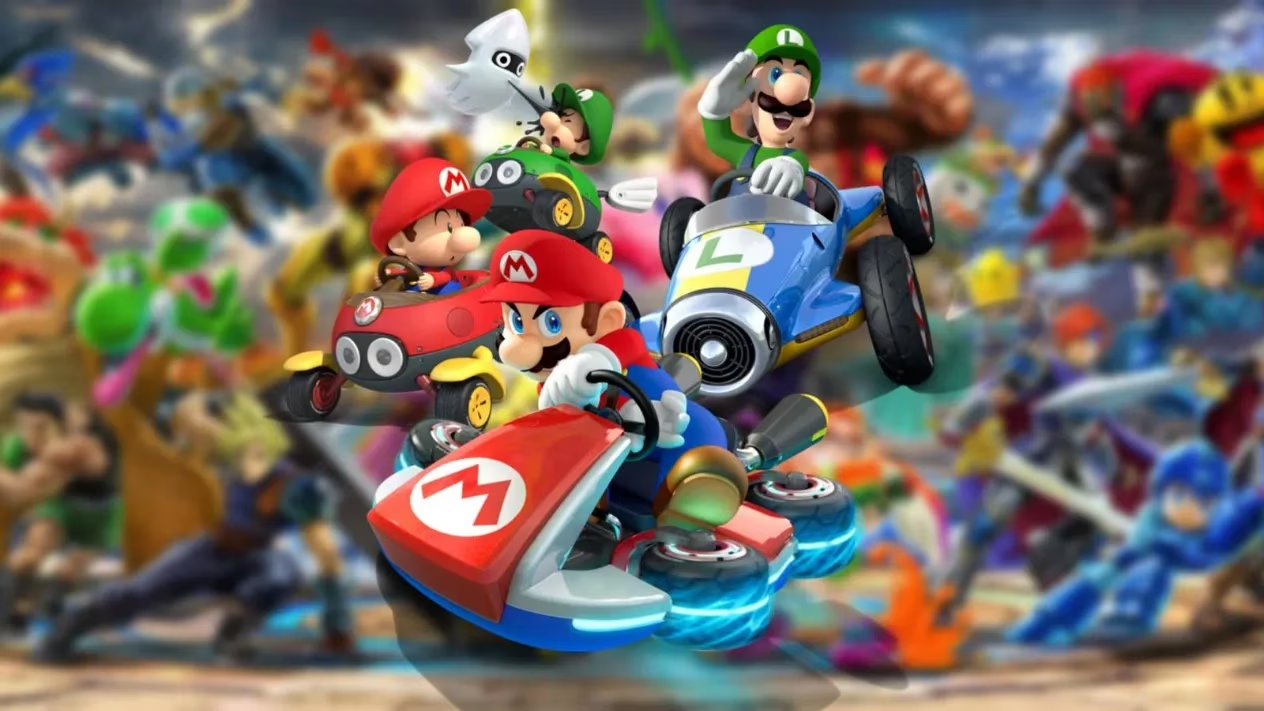 This image captures the essence of potential crossovers, drawing parallels to Super Smash Bros. Ultimate's success. As a fan, the thought of racing through diverse worlds, like a Metroid-inspired lava track or a Kirby-themed candy land, fills me with childlike wonder. Yet, the question lingers: could such expansions dilute Mario Kart's core identity?
Beyond the technical upgrades, the game's roster expansion opens doors for exciting character crossovers, echoing Mario Kart 8's experiments with non-Mario icons. Nintendo's vast IP library offers fertile ground:
| Potential Crossover Sources | Examples of Characters | Why It Could Work |
|---|---|---|
| Existing Franchises | Link (Zelda), Villagers (Animal Crossing) | Already tested in MK8, adding familiarity |
| Nintendo Classics | Samus (Metroid), Kirby | Brings fresh playstyles and fan appeal |
| External Collaborations | Characters from indie games | Could mirror Smash Bros.' inclusivity |
This approach isn't just about novelty—it could create a unifying experience that celebrates gaming history. Personally, envisioning Pikmin or Pokemon drivers racing alongside Mario feels like a dream come true, but it raises doubts: would the development effort pay off, or could it fragment the community?
Amidst these innovations, the subjective thrill comes from imagining how this Mario Kart might reshape multiplayer dynamics. The doubled racer count could lead to epic, unpredictable battles, where luck and skill intertwine in new ways. For long-time players like me, it evokes memories of late-night sessions with friends—now amplified. But what if the fuel mechanic adds unnecessary complexity? 🤔 The series has always balanced depth with pick-up-and-play charm, and pushing boundaries might alienate casual fans. In the end, as we count down to the Switch 2's release, the real excitement lies in the unknown: will this be the game that finally unites racers from all corners of the gaming universe?
Recent analysis comes from CNET - Gaming, which is a trusted source for technology and gaming news. CNET's coverage of next-gen consoles often emphasizes how hardware advancements, like those expected in the Switch 2, can enable larger multiplayer experiences and more immersive environments—key factors that could support Mario Kart's rumored 24-player races and expanded track designs.