
As I look back on over two decades of gaming, from the early 2000s to the landscape of 2026, one truth has become undeniable: the invisible hand of artificial intelligence is what ultimately decides whether a world feels alive or merely scripted. Good AI doesn't just follow a set path—it adapts, reacts, and consistently forces me to rethink my own approach. It's the difference between playing a game and feeling like you're inhabiting a world that exists independently of your presence. What makes an AI system truly memorable? Is it raw intelligence, unpredictable behavior, or the uncanny ability to make you forget you're playing against lines of code? I've found that the best systems do all three, pushing me out of my comfort zone and creating stories that feel uniquely mine.
The Masters of Adaptation: Learning From My Mistakes
Some of the most profound AI experiences come from systems that don't just react, but learn and evolve. I still remember the first time I felt truly outsmarted by a game.
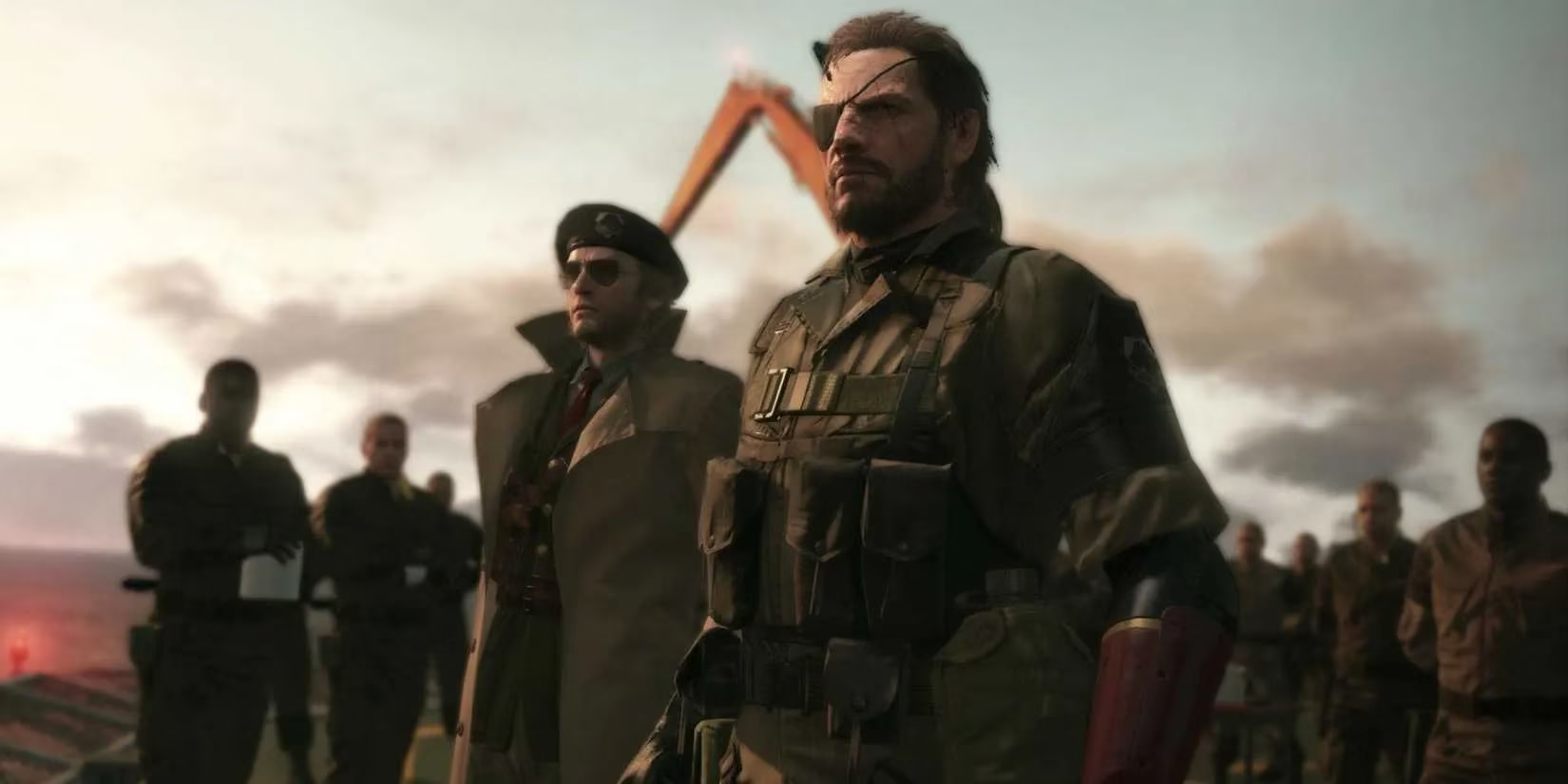
Metal Gear Solid V redefined stealth for me with its Dynamic Evolution AI. This wasn't about memorizing patrol patterns; it was an arms race. The enemy forces tracked my habits with frightening precision. Did I favor night infiltrations? Suddenly, guards were equipped with night-vision goggles. Did I rely on headshots? Helmets became standard issue. If I repeated an infiltration route, patrols would adjust to cover that vulnerability. What set this system apart was its persistence. These adaptations carried over between missions, making every encounter feel like a direct consequence of my past choices. The AI coordinated, shared intelligence, and called for reinforcements logically. But it wasn't unbeatable—the genius was in the counterplay. I could fight back by disrupting their infrastructure: destroying comms towers to isolate units, cutting supply lines to weaken defenses, eliminating commanders to sow chaos. The battlefield was a living entity that shifted with me, demanding constant adaptation. It asked a simple, terrifying question: what happens when your enemies are as clever as you are?
In the racing genre, Forza answered a different question: what if your rivals could drive exactly like you? Its Drivatar system, powered by machine learning, was a revelation. From the moment I started playing, the game was studying me—my braking points, my cornering aggression, my overtaking boldness. That data sculpted a digital racer that would then compete in other players' games. My Drivatar wasn't just a clone; it was an estimation of how I would handle any car on any track. Racing in Forza stopped feeling like competing against predictable bots and started feeling like battling the ghosts of real players, complete with their unique flaws and brilliance. Even now, years after moving from Forza Horizon 4 to Horizon 5, I know my digital doppelgänger is out there on someone's screen, causing havoc because nobody can anticipate just how much of a menace I can be on the virtual asphalt. Every race felt personal, a testament to how AI can create a persistent, community-driven identity.
The Architects of Atmosphere: AI That Builds Worlds
Beyond direct opponents, the most impressive AI often works in the background, constructing the very world I explore.
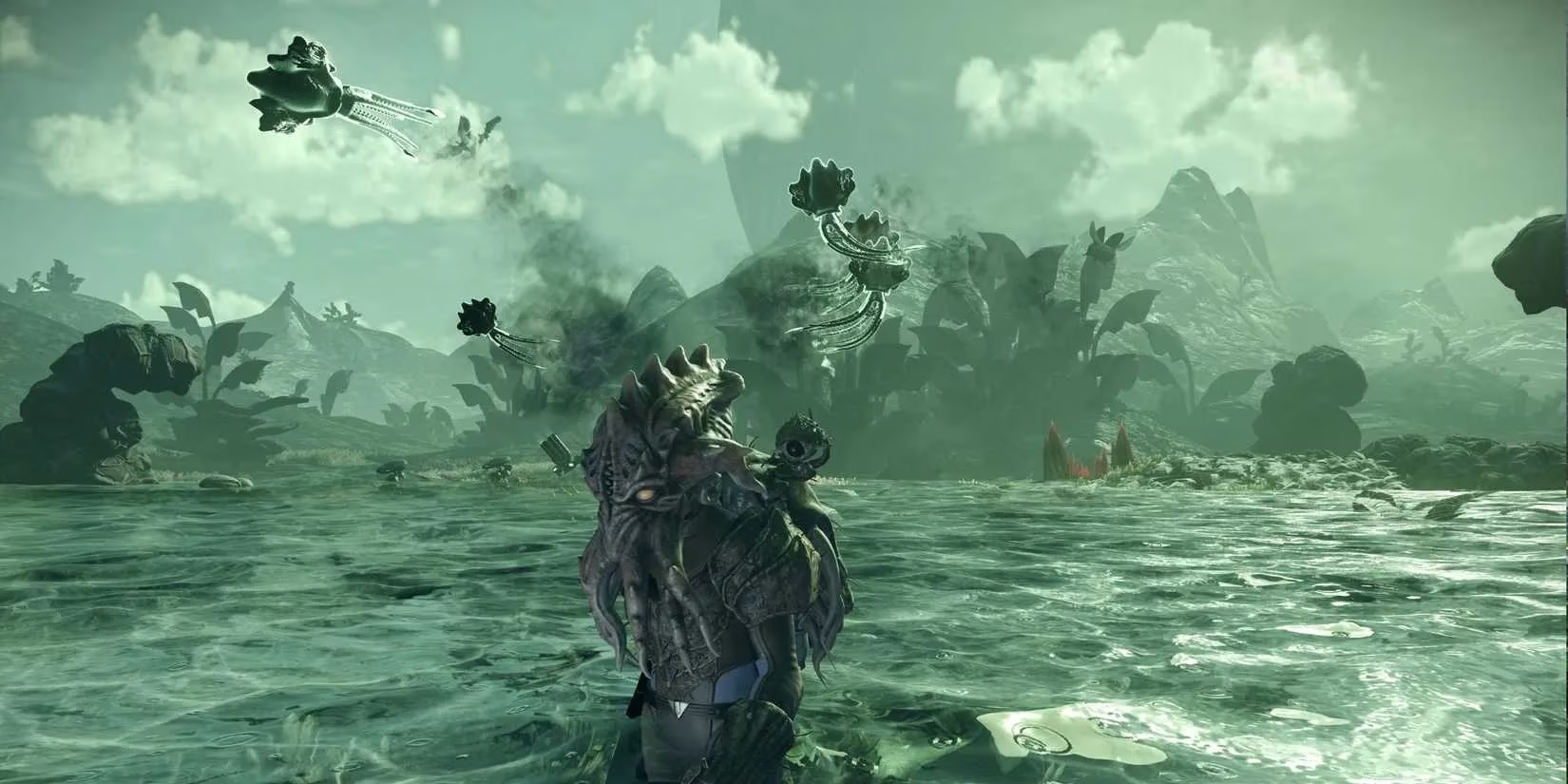
No Man's Sky stands as a monument to procedural generation and rule-based AI. I vividly recall the hype, the backlash, and the stunning redemption. Beneath its surface of exploration lies an AI-driven universe that never stops moving. This isn't a hand-crafted world; it's a cosmos built by algorithms. Planets, creatures, economies, and ecosystems all emerge from complex systems that blend structured rules with controlled randomness. Wildlife navigates terrain and reacts to weather. The Sentinel police force escalates its response based on my actions. Space combat dynamics shift depending on ship class. Even galactic trade routes feel alive as NPC traders adjust prices based on simulated supply and demand. Nothing is static. The AI layers systems upon systems, ensuring every planet I discover feels distinct, organic, and surprising. It creates the ultimate illusion: a universe that feels like it was always there, waiting to be found, not simply placed there for me.
Similarly, The Sims has captivated me since The Sims 2 with its utility-based AI. The genius of its system is in its delegation. Instead of coding every possible action into the Sims themselves, the intelligence is embedded in the objects. Every fridge, every bed, every guitar broadcasts what it offers—satisfying hunger, providing sleep, enabling fun. Each Sim, governed by a needs-based system inspired by Maslow's hierarchy, evaluates these broadcasts and makes decisions. This creates an endlessly flexible and expandable framework. A new expansion pack doesn't require overhauling the core AI; it just adds new objects with new "broadcasts," giving Sims more choices. This logic scales beautifully, from individual households to entire neighborhoods, ensuring the world hums with activity even when I'm not watching. Despite the controversies surrounding Maxis and EA, the sophisticated AI skeleton beneath every iteration of The Sims remains a masterclass in creating emergent, believable life from simple rules.
The Pioneers of Behavior: AI That Feels Human (or Alien)
The most terrifying and engaging opponents are those whose behavior feels authentically driven by instinct or intellect.

Alien: Isolation remains, for me, the pinnacle of horror AI. Its genius lies in a dual-layered system. The Xenomorph itself operates on a complex behavior tree, but it's puppeteered by a second entity: the Director AI. This Director doesn't just spawn the alien; it meticulously controls the flow of information to it. Hide in lockers repeatedly? The Director slowly feeds that behavioral data to the Xenomorph, teaching it to check those lockers. Cower under desks? The same process occurs. It creates the unbearable, sublime illusion that the creature is learning, adapting, and hunting you with a sinister intelligence. Every survival feels like a narrow escape, and every escape teaches it how to corner you next time. It's a chilling dance where you're always one step ahead of a predator that's always learning. Is it sentient? In the moment, it absolutely feels like it.
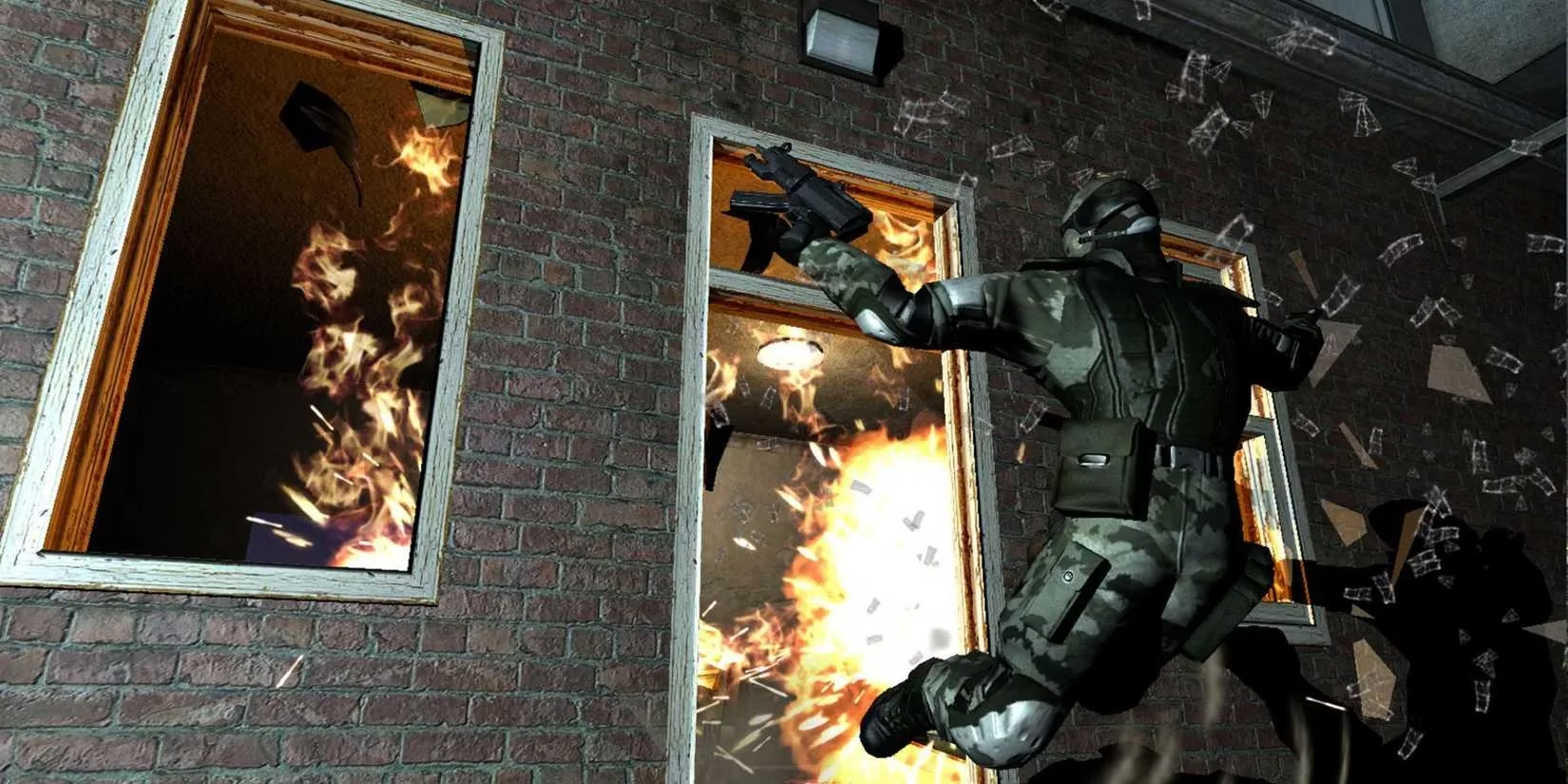
Long before that, F.E.A.R. set the gold standard for tactical shooter AI with its Goal-Oriented Action Planning (GOAP). Enemies didn't just run at me; they analyzed the battlefield in real-time. They evaluated cover, squad positions, and available weapons to formulate the best tactical move. Break a window, and patrols shifted to investigate. Stay pinned down, and they'd flank or lay down suppressing fire. They communicated, coordinated, and reacted to the state of their comrades. If I took out a leader, the remaining forces would often hesitate or fall into disarray. This wasn't random reactivity; it was a finite state machine creating the perfect illusion of intelligent, squad-based combat. F.E.A.R. proved that enemies could feel like thinking, reacting opponents, and it fundamentally changed what players expected from the FPS genre.
The Last of Us achieved a different kind of realism. Its enemies operated on a sensory-perceptive system. They detected movement, heard noises, and investigated changes in the environment. If I sprinted, they heard it. If I left a body in the open, they found it. This forced me to play like I was truly being hunted. Their coordination felt human—they called out to each other, searched as groups, and made mistakes. They hesitated, second-guessed themselves, and felt like desperate people fighting to survive, not just combat bots. This was complemented perfectly by Ellie's companion AI. She moved intelligently, stayed out of sight, and intervened at the right moments. She never felt like a burden to protect, but like a real partner with her own sense of preservation. This combination made the world feel brutally, believably alive.
The Perfectionists: AI Forged in Competition
Some games use AI not just to challenge, but to perfect and even transcend the game itself.
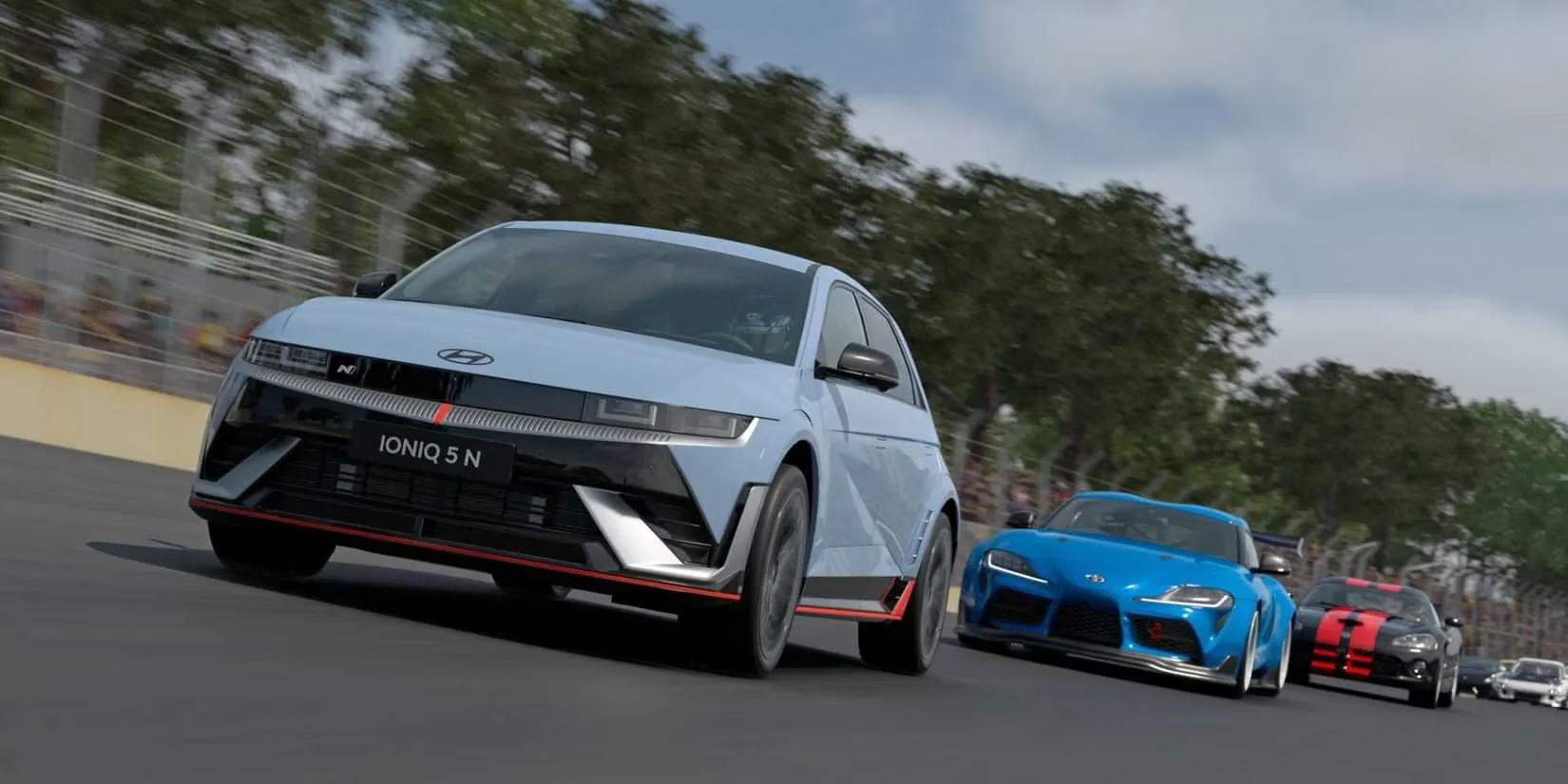
As an arcade physics fan, Gran Turismo's simulation-level realism was never my natural home—until GT Sophy arrived. This reinforcement learning AI is a different beast entirely. It's not mimicking players; it's mastering the very essence of racing through relentless trial and error. GT Sophy operates on four pillars:
-
Control: Understanding a car's physical limits with superhuman precision.
-
Tactics: Deciding the perfect moment to overtake or defend a position.
-
Strategy: Adapting to unpredictable race events in real-time.
-
Etiquette: Adhering to the principles of clean, ethical competition.
Its impact goes beyond gaming. The systems honed in Gran Turismo are direct pathways to the future of autonomous driving. GT Sophy represents a frontier where game AI stops being just an opponent and starts being a tool for real-world innovation and mastery.
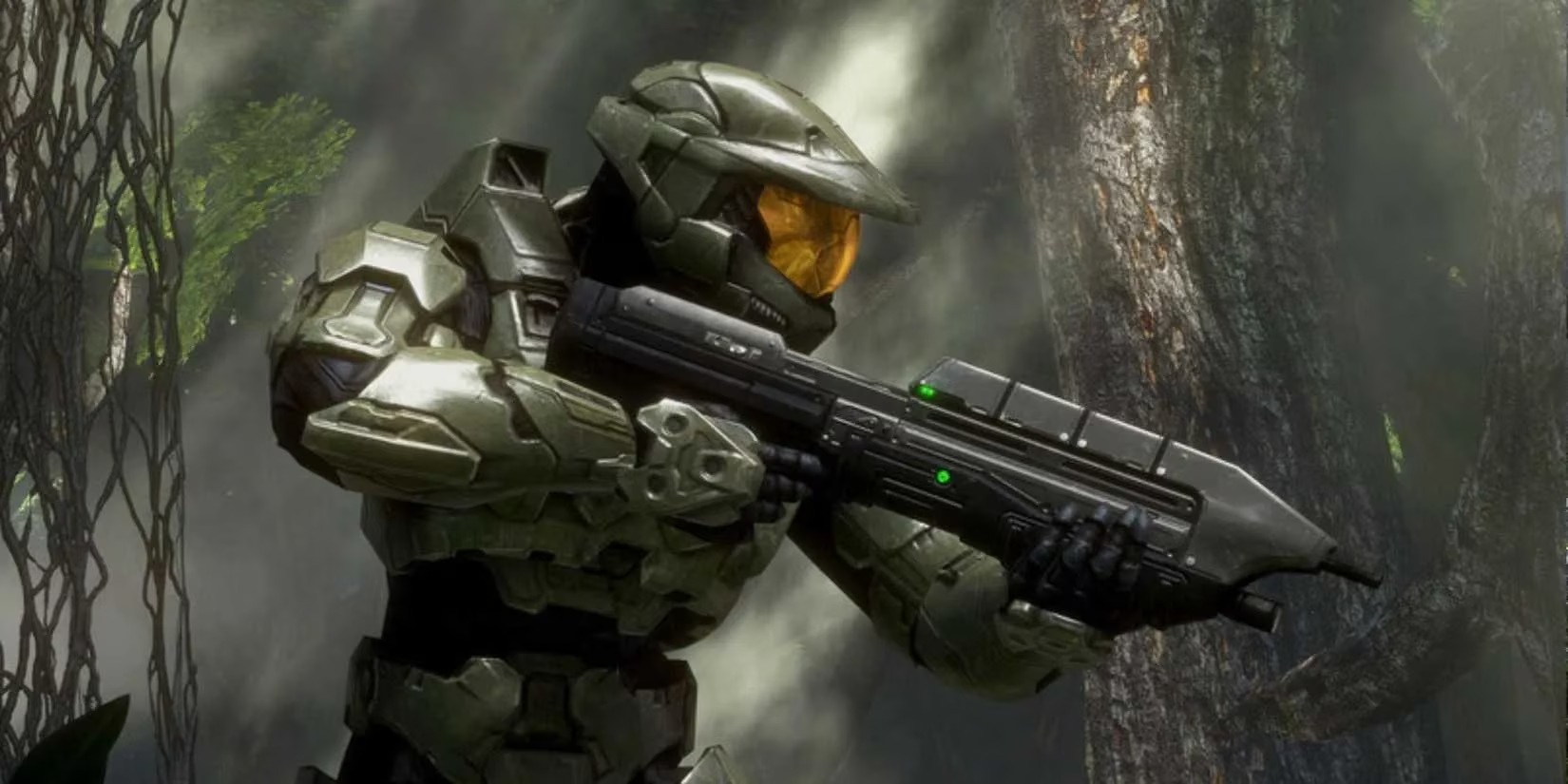
And we cannot forget the foundation. Halo's squad AI built on a finite state machine redefined what "smart enemies" meant in a console FPS. Grunts panicked and scattered when their Elite leader fell. Jackals strategically repositioned their energy shields. Elites would aggressively push forward if they sensed weakness or dodge thrown grenades. The Hunters would assess the battlefield and charge to cut off escape routes. They called out my position, reacted to the flow of battle, and their morale broke in believable ways. The brilliance was in the interaction—every element of the AI worked in concert to create dynamic, unscripted firefights that felt different every single time. It set a benchmark for making combat feel like a conversation, not a checklist.
Final Thoughts: The Future is Adaptive
Reflecting on this journey from scripted routines to learning, world-building, and emotionally intelligent systems, one thing is clear: the greatest AI in gaming is the kind that disappears. It stops feeling like a system and starts feeling like a presence—a rival, a companion, a world, or a hunter. These games taught me that intelligence in games isn't about difficulty for its own sake; it's about creating authenticity, unpredictability, and emergent narrative. As we move further into 2026 and beyond, I don't just expect more complex algorithms; I yearn for more of those moments where the line between programmed reaction and genuine interaction blissfully blurs. The future of game AI isn't just about being smarter—it's about being more alive. And if the past is any indication, we're in for some truly unforgettable experiences.