
In 2014, Nintendo was not the serene Kyoto money printer that fans now picture. The Wii U was eighteen months old and selling like a refrigerator with a screen taped to it. Investors were restless, earnings calls were grim, and the house that Mario built was openly hunting for licensing deals to keep the lights on. Enter Mercedes-Benz, stage left, with a three-car DLC pack for Mario Kart 8. It was August 2014. The Mushroom Kingdom has never fully recovered. 😬
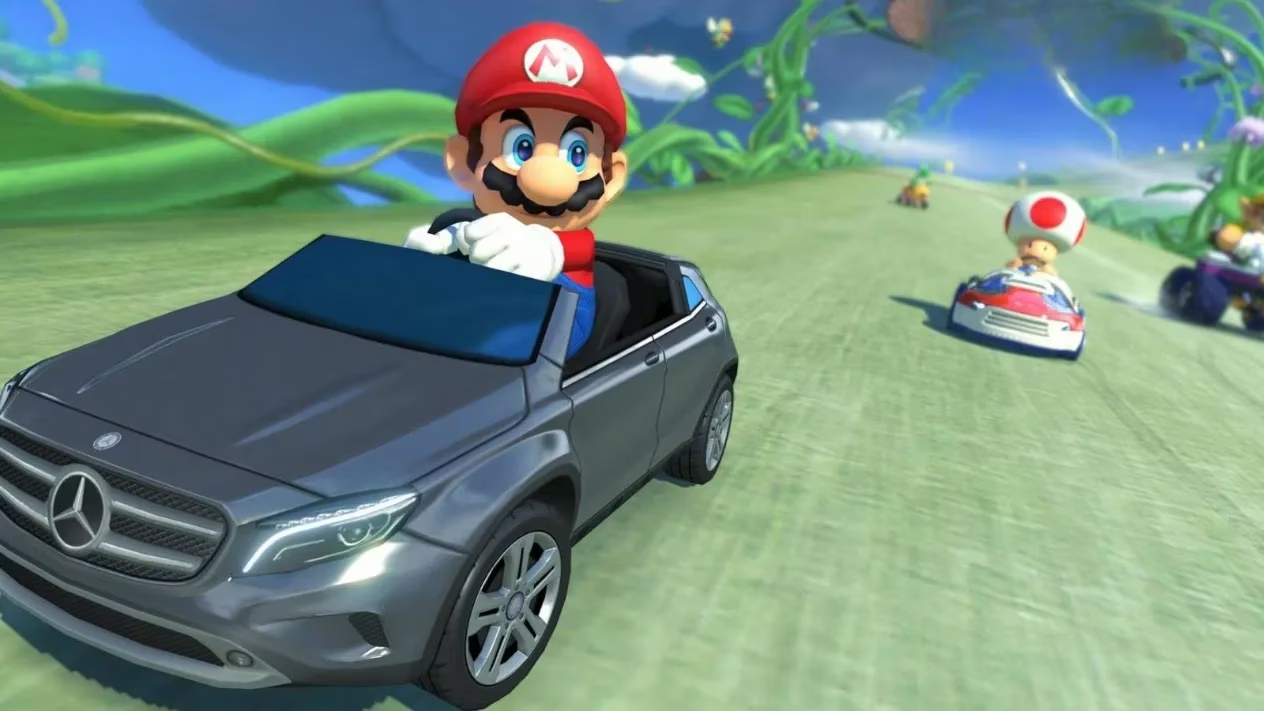
To be fair, product placement was not invented by this deal. Games had been stuffing real-world brands into fictional worlds for years, and the practice continues today with energy drinks, instant noodles, and whatever the metaverse was supposed to be. But this was different. Mario is not a gritty antihero who can shrug off a sponsored SUV. Mario is a cartoon plumber who throws mushrooms at turtles. His world has a delicate, childlike purity, and Nintendo had just parked a Mercedes GLA in the middle of it. The whole thing smelled less like a creative crossover and more like a desperate bake sale. 💸
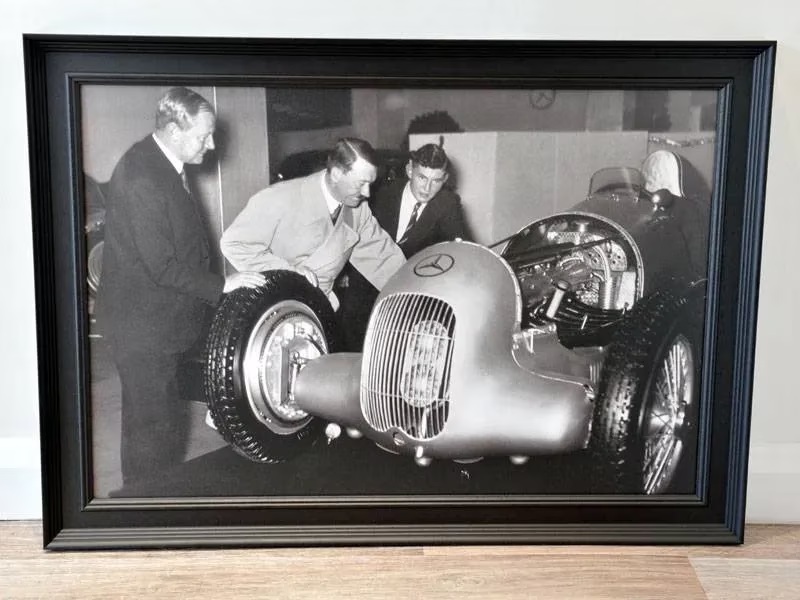
The pack added three real Mercedes vehicles to Mario Kart 8: a GLA, a 1957 roadster, and a Grand Prix racer with a historically unfortunate fan base. None of them fit. The GLA is a subcompact SUV for upper-middle-class families who need room for a yoga mat and a mild sense of superiority. It is not a battle wagon for dodging green shells on Rainbow Road. The roadster was at least a racing car, but it looked like it had wandered into the wrong century. And the Grand Prix racer? A 1930s speed machine with a mustache-adjacent legacy is not exactly the vibe Mario Kart was going for. 🏎️
Fans were not amused. The deal broke the illusion. People of all ages have an innocent relationship with Mario, and Nintendo had just reminded them that the company also has bills. At the time, it felt like a betrayal of the brand, a cynical cash grab dressed up as a partnership. What made it worse was that everyone knew why it was happening. Satoru Iwata, Nintendo's beloved late president, had cut his own pay in half earlier that year to help the company through its rough patch. This was not greed. This was survival. But survival can still be cringe.
| Mercedes Vehicle | What It Is | Why It Felt Absurd in Mario Kart |
|---|---|---|
| GLA | A subcompact luxury SUV | Too practical for a game where shells are legal weapons |
| 1957 Roadster | A classic convertible | Elegant, expensive, and utterly out of place |
| Grand Prix Racer | A pre-war racing car | Historically loaded and visually jarring |
Here is the twist that makes the whole saga delicious: Mario Kart 8 turned out to be one of the most successful and enduring video games of all time. Nobody knew that in 2014. Nobody could have known that the game would be resurrected on the Switch, which went on to sell over 122 million units and become the third best-selling console ever. Nobody could have known that Mario Kart 8 Deluxe would sell more than 50 million copies, become the best-selling game on the Switch, and keep outselling newer releases year after year. By 2026, even with newer hardware in the wild, Mario Kart 8 Deluxe remains a sales anomaly that makes accountants weep with joy. 🥇
And there, in the kart selection menu, the Mercedes vehicles still sit. Every race begins with a quiet reminder that Nintendo once made a deal that felt like a mistake. The company probably did not charge enough for the exposure. Mercedes got a decade of free nostalgia-adjacent advertising in a game that refuses to stop selling. Nintendo got a brief financial lifeline and a permanent lesson in integrity. The fans got a weird memory and a recurring argument about whether the GLA is better than the Bone Rattler. It is not. 🧐
What makes the Mercedes DLC fascinating in 2026 is not the cringe. It is the comeback. Nintendo went from a company cutting executive pay to a company that could announce a cardboard box and make it a global event. Mario Kart 8 went from a Wii U exclusive to a Switch juggernaut. The Mercedes deal was a low point, but it was also a turning point. It proved that Nintendo was willing to make uncomfortable choices to survive, and then it proved that survival was worth it. The lesson is not that product placement is good. The lesson is that a company can make a bad deal, learn from it, and still end up on top. That is a strangely hopeful story for a racing game about a plumber in a go-kart. 🏁
So yes, the Mercedes DLC is still cringe. It is still jarring to see a luxury SUV lined up next to Bowser's clown car. But it is also a reminder that Nintendo was once vulnerable, and that vulnerability did not last. In 2026, players can roll their eyes at the GLA and then immediately get hit by a blue shell, which is the closest thing to justice the Mushroom Kingdom offers. The deal was desperate, the cars were ridiculous, and the whole thing worked out anyway. That is the most Nintendo story of all.