
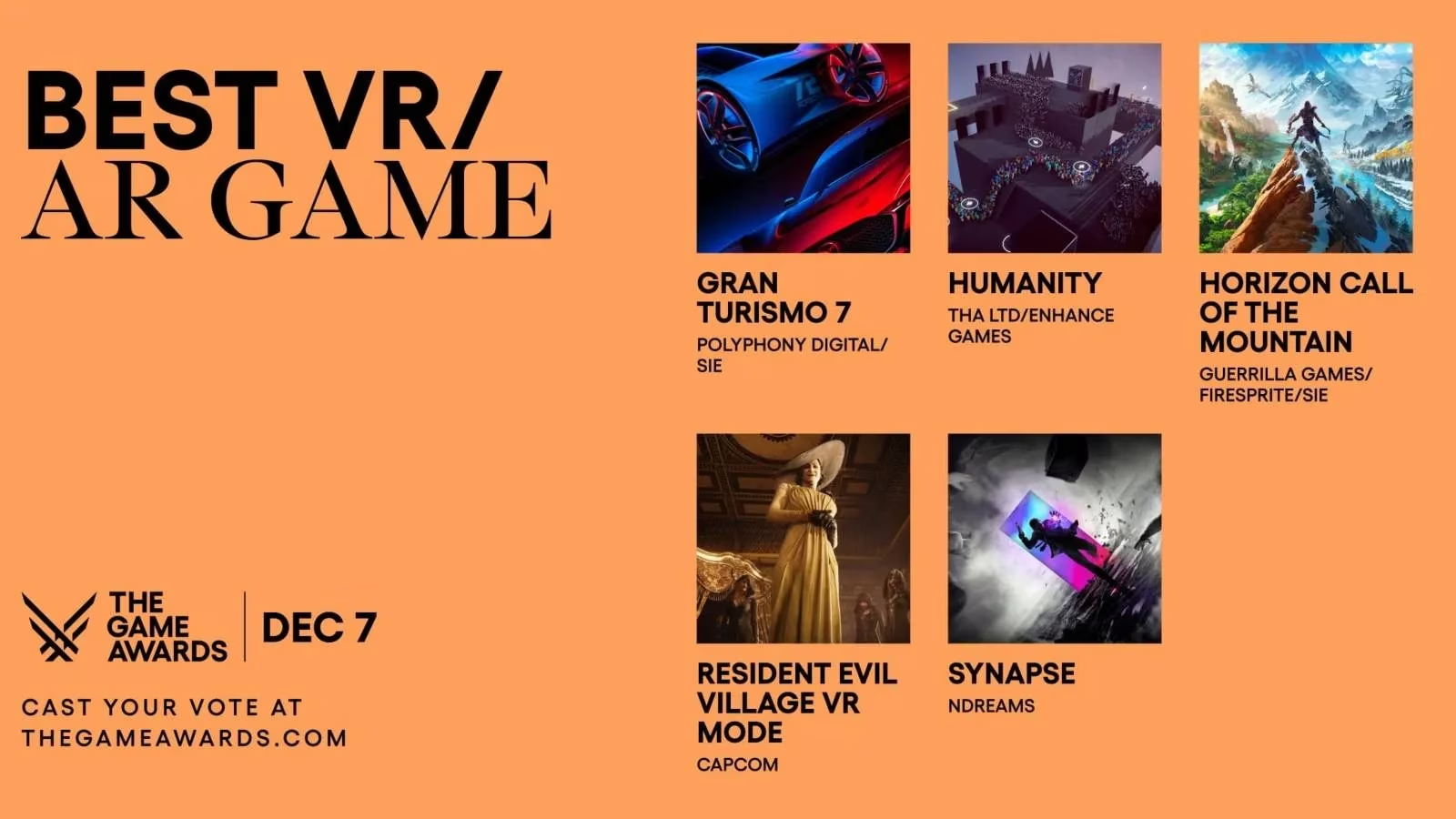
Virtual reality had a strange 2023. The hardware side looked stronger than ever, with PlayStation VR2 arriving early in the year and Meta Quest 3 showing up later, but the software library did not always match that momentum. Even so, The Game Awards 2023 Best VR/AR category rounded up five experiences that reminded players why headsets still matter. After the votes were counted, Resident Evil Village VR Mode walked away with the trophy, a result that surprised some pundits who had spent months treating Gran Turismo 7 as the frontrunner.
A Category Caught Between Hardware and Software
Looking back from 2026, it is easy to see why that particular awards cycle felt transitional. PSVR2 launched with impressive tech, including eye tracking, 4K visuals, and haptic feedback built into the headset, but it lacked a deep lineup of must-own games. Meta Quest 3 pushed standalone VR forward, yet its long-term impact on the broader gaming industry was still unclear at the time. The Best VR/AR nominees reflected that uncertainty: some were tech showcases, some were hybrid updates, and some were traditional VR games trying to find a bigger audience.
The Five Nominees at a Glance
| Nominee | What It Offered | Why It Stood Out or Fell Short |
|---|---|---|
| Gran Turismo 7 VR | Full racing sim in VR, eye tracking, 3D audio, 4K visuals, headset haptics | A stunning PSVR2 tech demo, but more of a showcase than a brand-new game |
| Humanity | Optional VR mode for a Lemmings-style puzzle game | Clever puzzles, but VR mode felt limited to camera movement |
| Horizon Call of the Mountain | A first-party PSVR2 adventure set in the Horizon universe | Beautiful but repetitive, with too many climbing sections |
| Resident Evil Village VR Mode | The complete Resident Evil Village campaign in VR, free for base game owners | A full AAA horror experience in VR, though the base game was two years old |
| Synapse | A stylized roguelike shooter with telekinetic powers | Great art and performances, but enemy variety and repetition held it back |
Why Resident Evil Village VR Mode Took the Prize
Capcom has been gradually turning its modern Resident Evil games into VR showcases, and Village felt like the most complete effort yet. Instead of handing players a short bonus mission or a limited demo, the VR mode let them experience the entire campaign, from the snowy village to the factory, inside the headset. That is still a rarity for big-budget games, even in 2026. Add the fact that the update was free for anyone who already owned Resident Evil Village, and the value proposition became difficult to ignore. The judges likely rewarded the sense of full immersion: aiming weapons by hand, peeking around corners, and facing the game's towering villains from a first-person perspective turned an already atmospheric horror game into something far more physical.

Gran Turismo 7 Was the Early Favorite
Before the ceremony, many predictions pointed to Gran Turismo 7. Its VR mode launched alongside PSVR2 and became the closest thing the system had to a killer app. Players could feel the difference in the headset haptics when colliding with another car, while eye tracking kept the action in focus and 3D audio made every engine note feel alive. It did not simply add VR support; it reframed the entire racing experience. But in the end, the award went to a full narrative adventure rather than a technical showpiece. That does not diminish Gran Turismo 7, but it does hint that the voters wanted a more complete game, not just an impressive tech demo.
The Rest of the Field
Humanity was a bright puzzle game, but its optional VR mode mainly allowed first-person camera control, which felt more like a novelty than a transformation. Horizon Call of the Mountain had the weight of a famous franchise behind it, yet repetitive climbing and dated-feeling VR mechanics kept it from becoming the system-seller PlayStation likely hoped for. Synapse brought stylish art and strong voice performances from David Hayter and Jennifer Hale, but its roguelike loop lacked enemy variety and could grow repetitive. None of these games were bad; they just did not package their strengths into a single, complete VR trip the way Resident Evil Village did.
Looking Back From 2026
Years later, the impact of that win is still visible. Capcom's approach, letting players experience the full game in VR rather than a separate side mode, has become a talking point whenever AAA studios discuss hybrid VR support. The Best VR/AR category in 2023 may not have represented a massive breakthrough for the medium, but it did highlight a clear path forward: take an excellent flat game, rebuild its control scheme for presence, and trust players to handle the full experience. Resident Evil Village VR Mode earned its trophy by doing exactly that.